Role
Lead / Solo Product Experience Designer
Team
Product Manager
Senior Software Engineer
Senior Quality Test Engineer
The Financial Counselor’s Grievances
The company’s initial re-enrollment design (meant to enhance the experience) resulted in more user frustrations. I launched an investigation to uncover the true user pain points in order to provide an enhanced UX that reversed previous failures. This ultimately led to an efficient, streamlined patient re-enrollment process.
Research
I led extensive user interviews to strategically identify and validate the root user pain points of the re-enrollment workflow.
Critical Insights
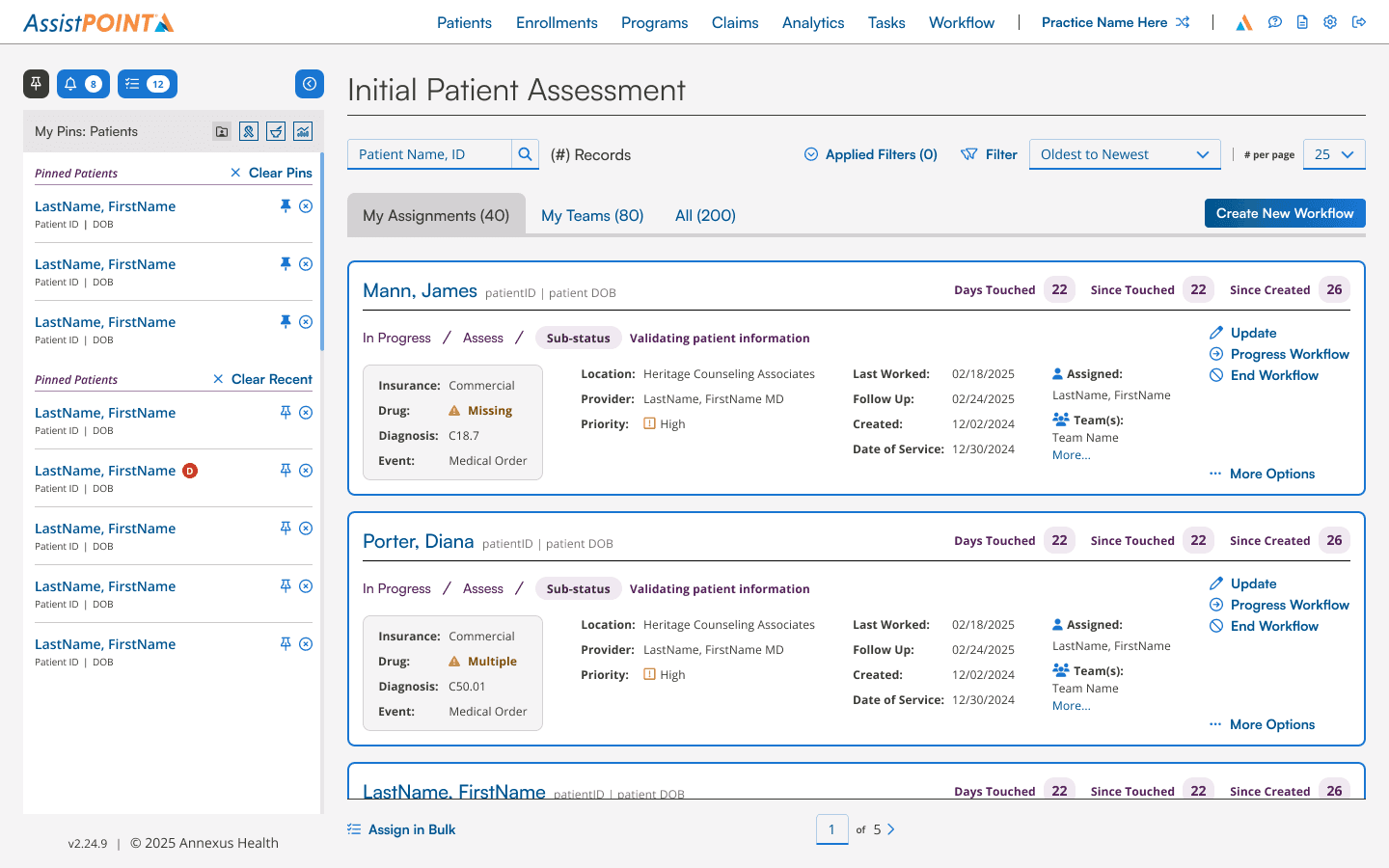
The initial workflow model was fundamentally flawed. It assumed a simple path of Application → Draft → Submitted path. My research exposed the missing pieces of the Re-Enrollment application workflow. The original lacked the decisive context for the user to ascertain their approach in handling the application and set expectations for next steps.
Problem
Failed Information Architecture
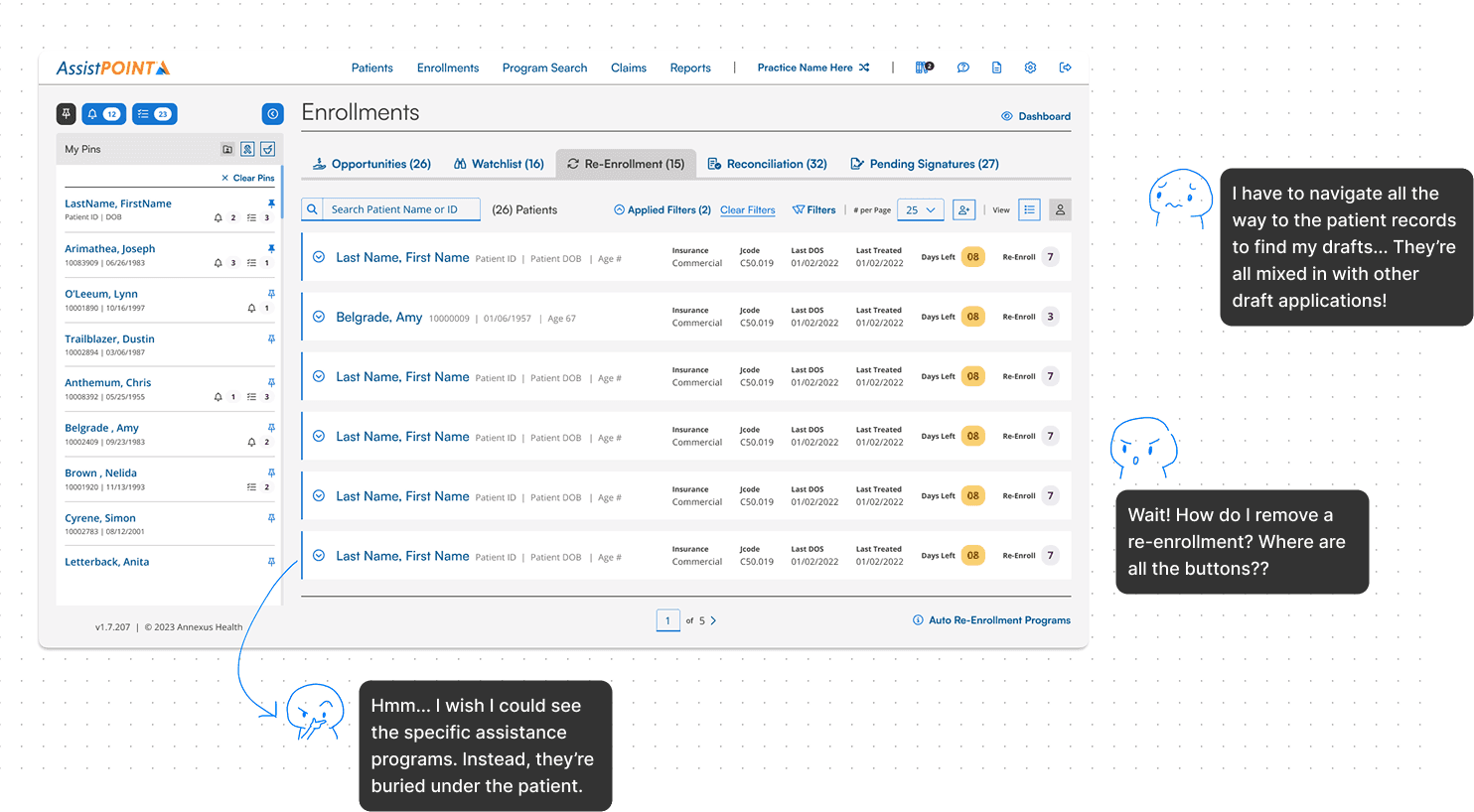
Financial counselors struggled to find critical patient data, leading to interrupted workflows and frustrated experiences.
Usability Backfire
The previous redesign did not take into consideration crucial user input. Consequently, the resulting experience that amplified the pre-existing pain points rather than solving for them.
Cognitive Load
Users abandoned
pre-established workflows due to the non-intuitive interface that resulted from the redesign. Users spent more time end to end.
Solution
I led extensive user interviews to strategically identify and validate the root user pain points of the re-enrollment workflow.
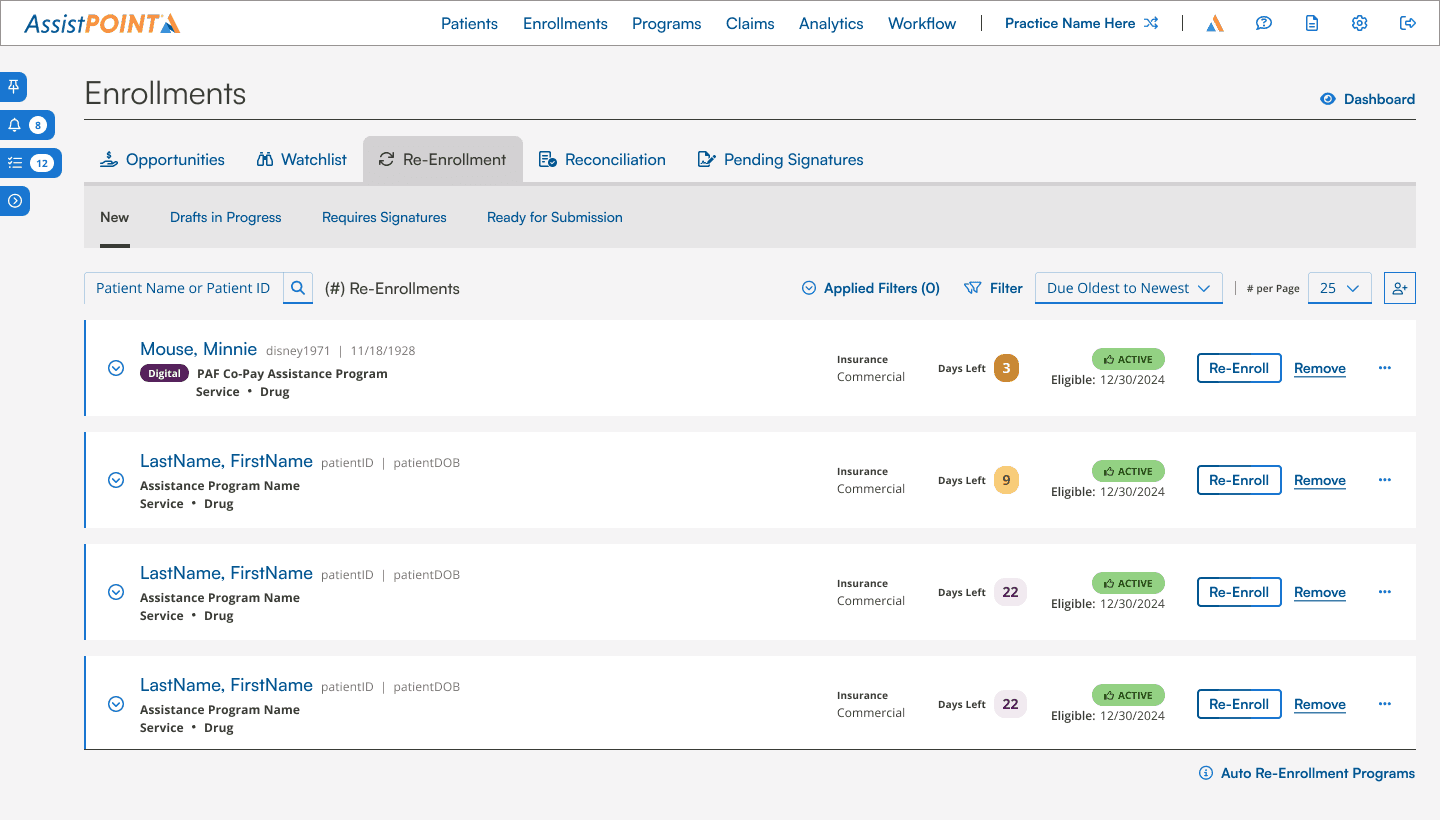
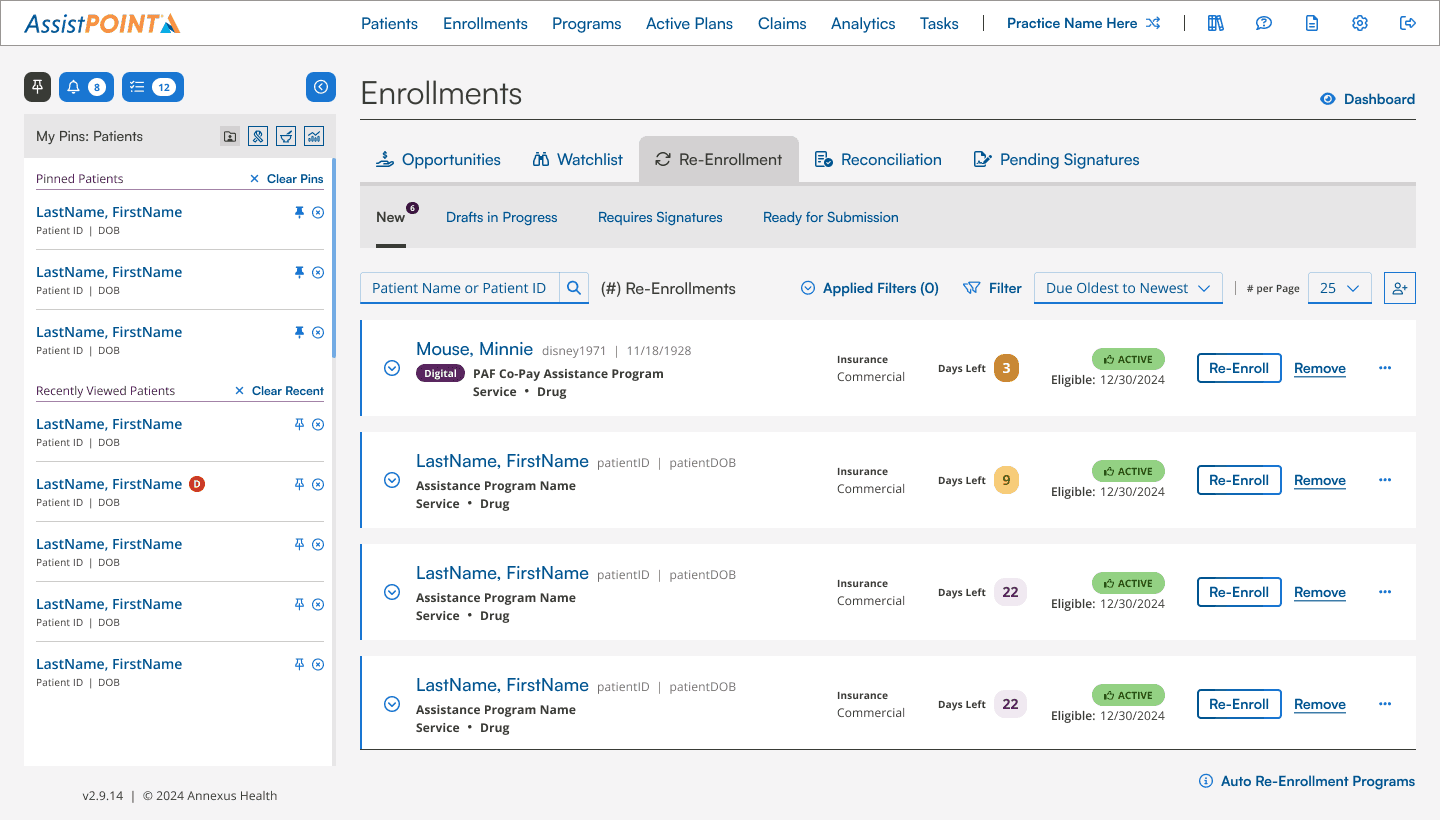
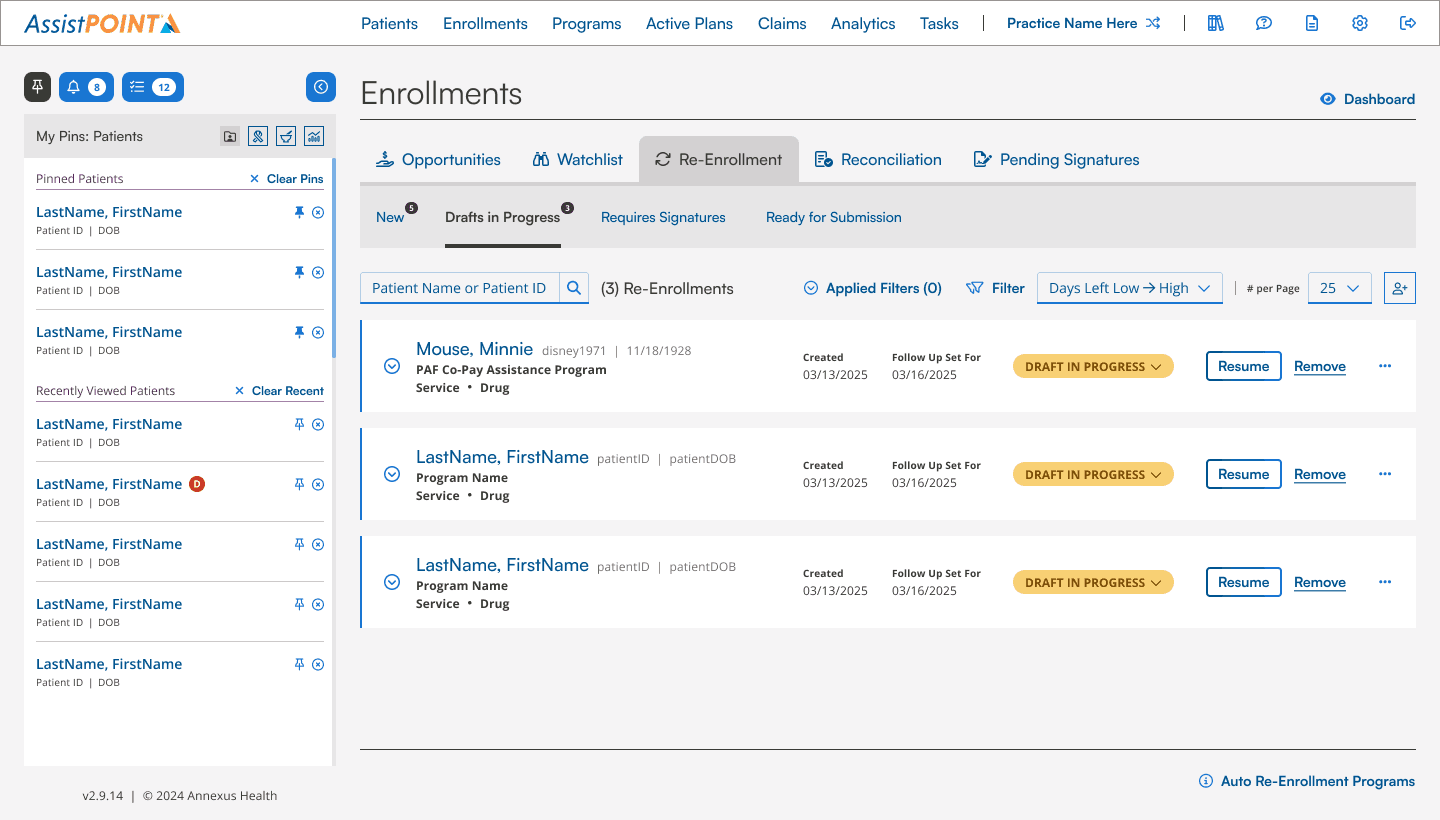
Visual Categorization of Drafts
Surface up application progress
Increased transparency to the process to set user expectations
Facilitate momentum in the user workflow
Context-Aware Workflow
Leverage specific draft statuses to eliminate user friction
Predictable and accelerated path for end-to-end patient application completion
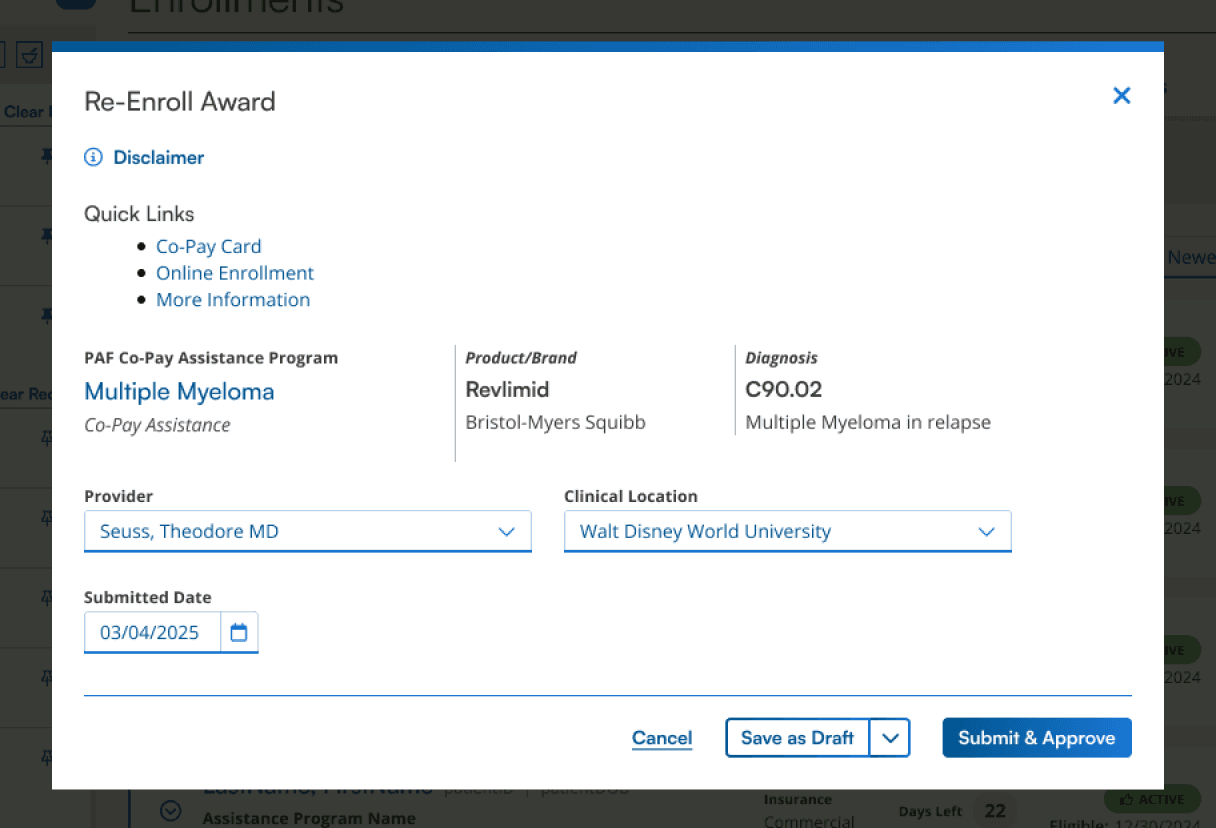
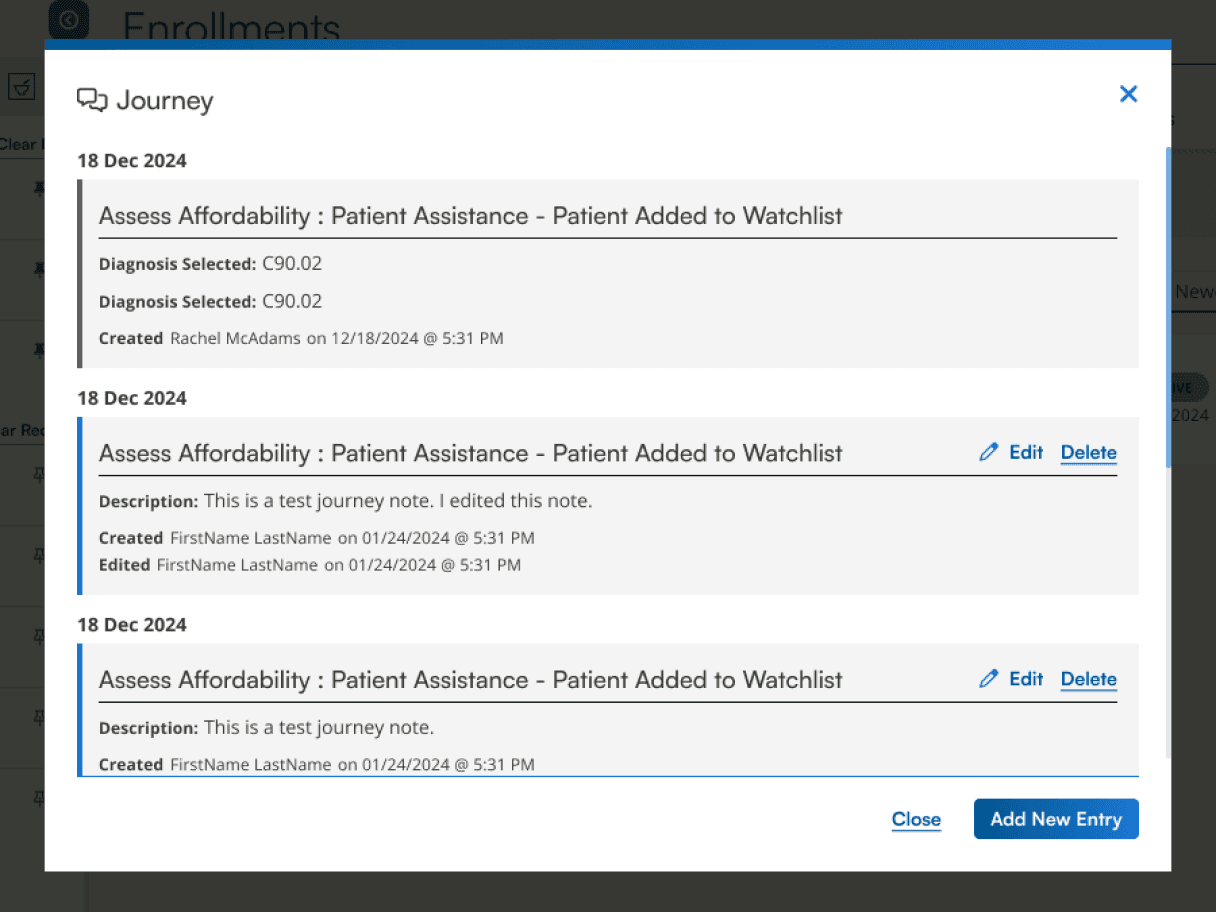
Reduced Cognitive Load
Reduced cognitive load and potential for abandonment by integrating key page resources directly in the re-enrollment workflow, eliminating back and forth navigation
Process
Led user interviews with internal stakeholders and external users to uncover the underlying key pain points and friction from the redesign rollout.

“The new design removed the most essential part of Re-Enrollments.”

Audited pre- and post-redesign workflows to identify gaps and opportunities to improve.
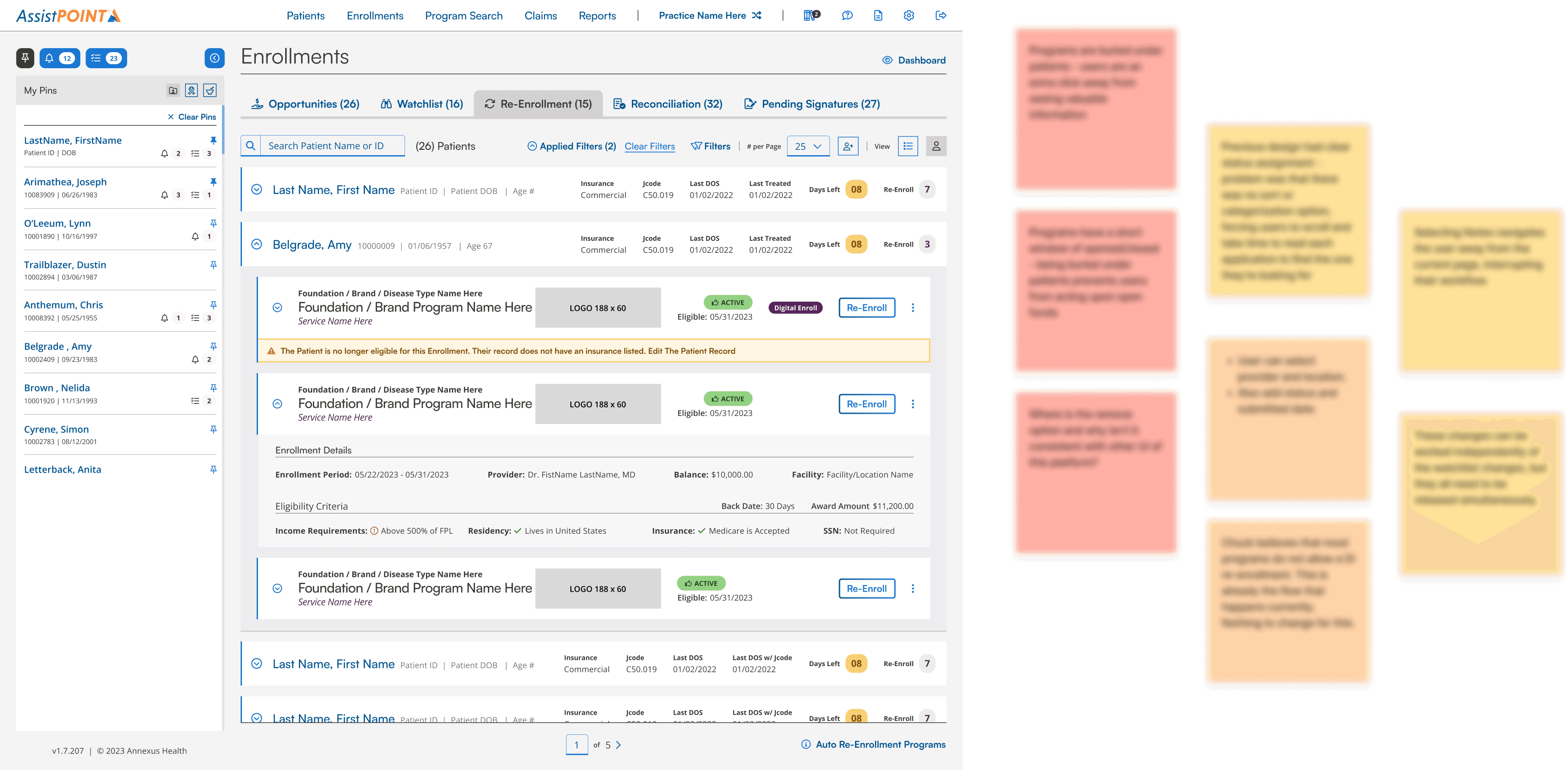
Created empathy map to capture user pain points and needs.
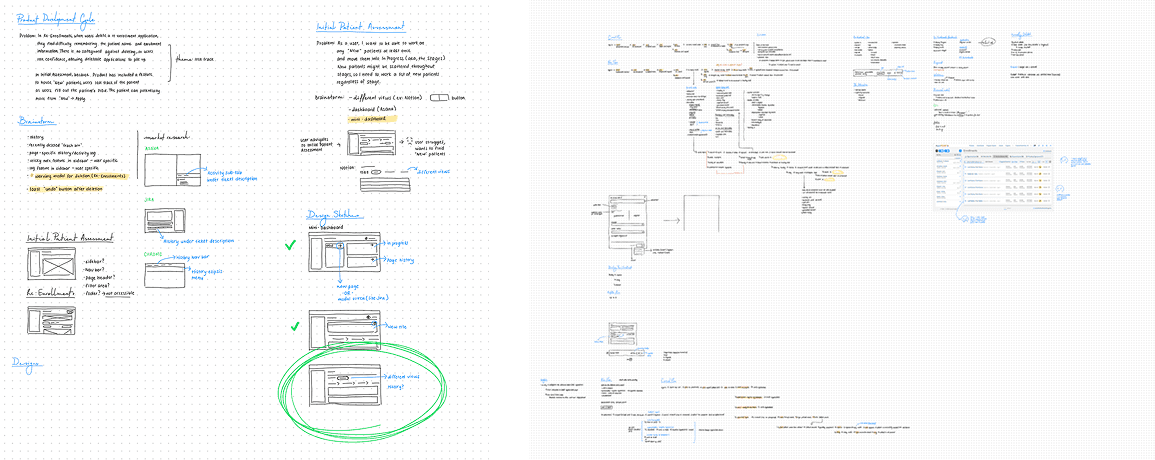
Sketches, designed and tested low-fidelity wireframe concepts with internal stakeholders and users.
Iterated based on feedback.
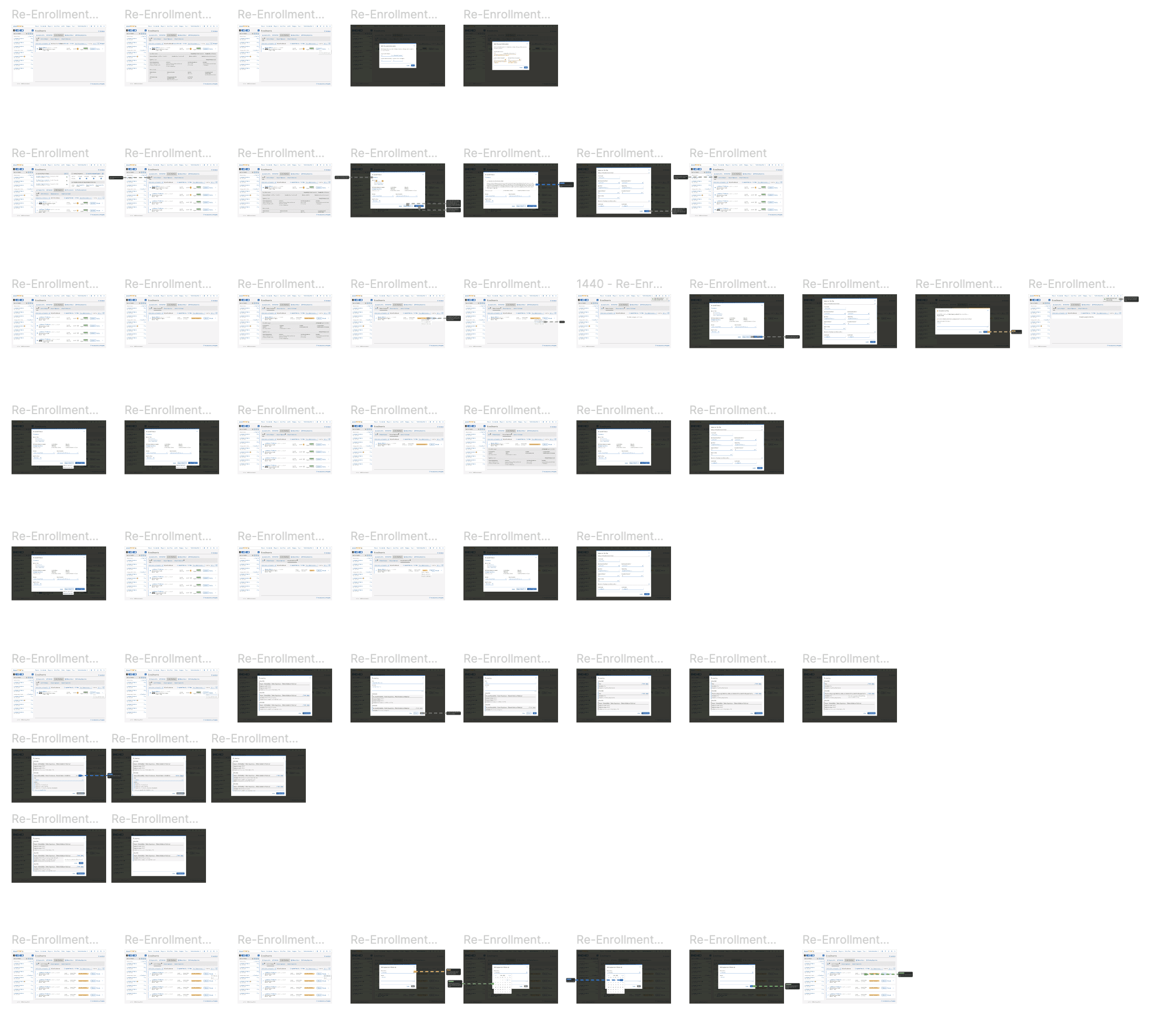
Final Designs
Final Steps
Defined happy path finalization with product managers and developers to assess technical feasibility.
Built high-fidelity prototypes and conducted usability testing with multiple sample groups.
Collaborated with engineers and product on implementation.
Post Launch
Reduced the average end-to-end workflow time from 19 days to 4 days, resulting in a 78.95% efficiency improvement.
Ongoing monitoring of user feedback showed high satisfaction rating from the design update.
Established strategic planning for future improvements based on post-launch analytics.
More Works
arrow-down